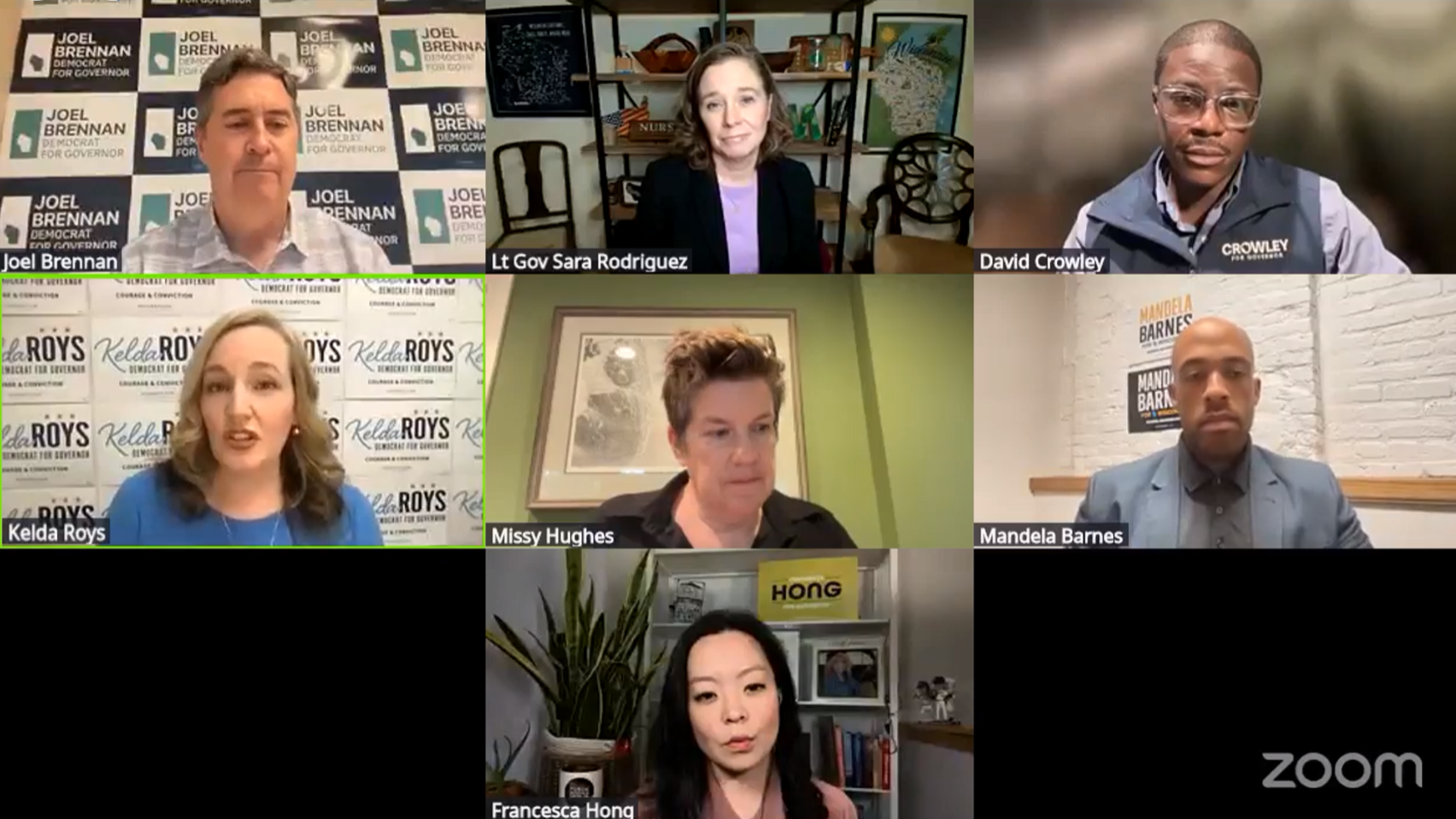
State Rep. Francesa Hong called for a pause on new data centers in Wisconsin, while Dem gubernatorial rival and former DOA Secretary Joel Brennan said he believed a pause of just a few months was needed to implement important guardrails.

Meanwhile, former Lt. Gov. Mandela Barnes told a Wisconsin Citizen Action virtual forum last night he wanted more stringent regulations before any new data centers are built in Wisconsin. The other Dem gubernatorial contenders who participated in the event hosted over Zoom all favored new regulations on things ranging from the environmental impact to any effect the data centers may have on utility bills for other customers.

State Sen. Kelda Roys, of Madison, and Milwaukee County Exec David Crowley both backed new regulations. They also raised concerns that blocking development of data centers in Wisconsin would result in them moving to other states with little or no regulations rather than having them comply with Wisconsin-based standards.

Data centers have become a lightning rod in Wisconsin and other states. A Marquette University Law School Poll conducted last month found 69% of voters believe their costs outweigh the benefits. That was up from 55% in October.

Hong, D-Madison, said a pause is needed until steps are taken to delete corporate subsidies and there are plans for data centers to invest in alternative energy sources.

“We need time to be able to implement the regulations and to protect our natural resources, and that is going to take time and legislation in the Legislature to ensure that people get to a place where communities feel safer and feel like they have the resources to make this decision in their communities,” she said.

Brennan, on leave from his job as president of the Greater Milwaukee Committee, said he believes regulations need to ensure no taxpayers cover the cost of construction, operation or transmission of data centers. He also wants assurances that they won’t be on the hook if a data center shuts down. Brennan believed that could be accomplished during the first few months he was in office.

“I don’t think this is something that we need to wait on forever,” he said.

Barnes, Hong and Roys all supported increasing Wisconsin’s minimum wage to $20 an hour.

The others backed raising it from the current $7.25, though some didn’t commit to a specific number.

Hong, a former restaurant owner, said she wants to eliminate the tipped minimum wage of $2.33 an hour and the subminimum wage for those with disabilities. 

Roys noted she co-authored legislation that would take the minimum wage to $15 an hour before moving it to $20 an hour. She said the move needs to be paired with restoring the ability of public sector unions to collectively bargain, ending right-to-work and other measures.

Barnes called it an “embarrassment that people could potentially be paid” $7.25 an hour.

Former WEDC Secretary and CEO Missy Hughes said she supports raising the minimum wage and wants a study of whether it should be $15 an hour or $20 an hour. She said businesses aren’t paying minimum wage now, and it should be raised to a level that reflects the market.

Lt. Gov. Sara Rodriguez said it should be raised to $15 or $20 an hour and then tied to inflation. She favored staring at $15 an hour and then continuing to increase the minimum to “where it’s actually livable for people.”

Brennan and Crowley didn’t commit to a target number for a new minimum wage.

Brennan noted moving to $15 an hour would mean a raise for 18% of women. Like others who participated in the forum, he backed repealing a state law that bars local communities from offering a higher minimum wage than the state and said boosting it should be accompanied with new initiatives such as paid family leave.

Along with ending pre-emption, Crowley called for steps like repealing Act 10 and right-to-work along with indexing the minimum wage “so wages can keep up with the cost of living.”

Watch the video here.