

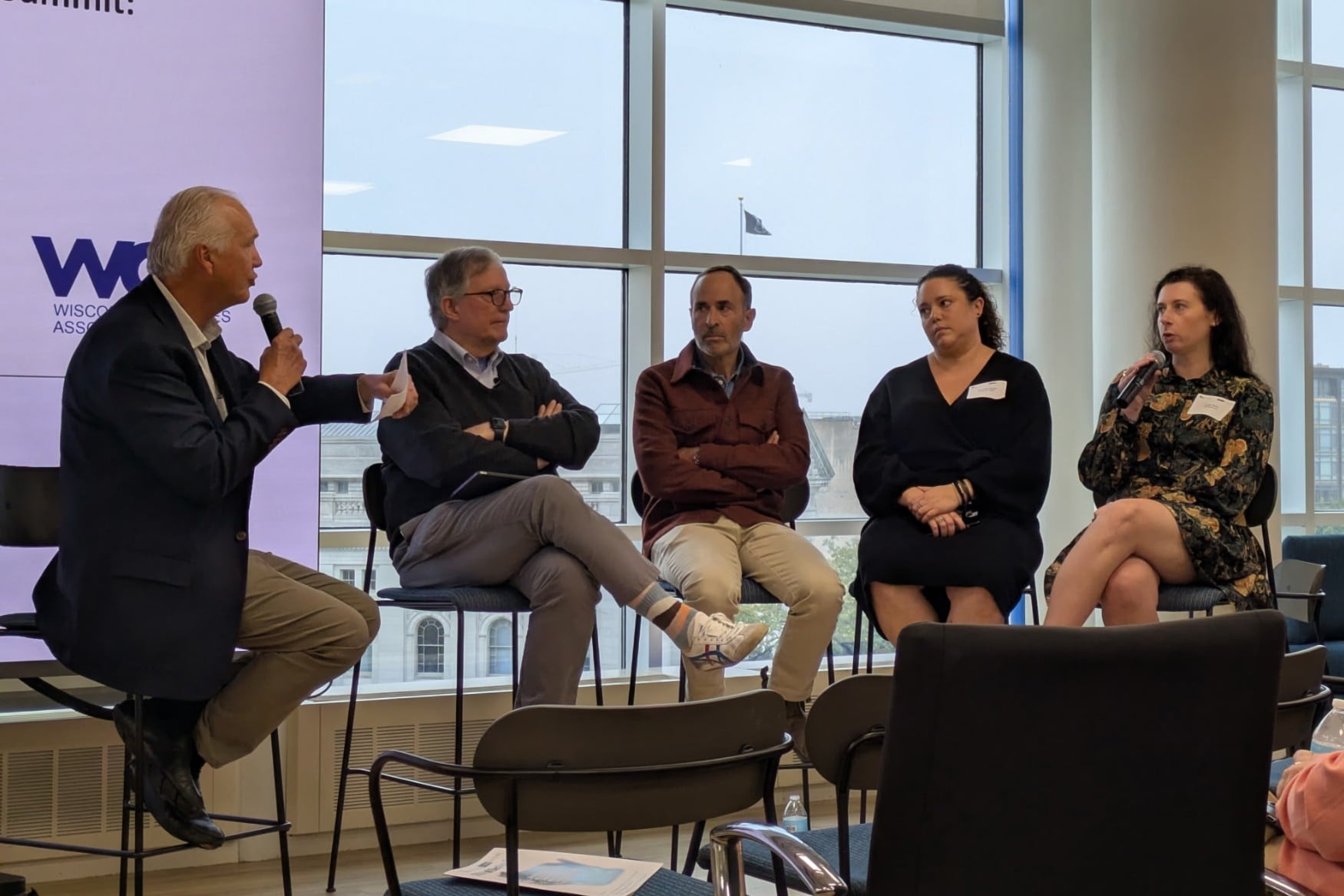
Panelists at a WisPolitics-State Affairs polling summit had a warning for overly enthusiastic Democrats: just because they’re mad at the other guy doesn’t mean they like you.
Discussing an online, text-based focus group she’d worked on in Wisconsin, GOP pollster Amanda Iovino said at Thursday’s event in Madison there was “a lot of frustration” with the Republican brand, even among Republicans.
“It’s important to note that it shouldn’t be taken as a mandate, ”Iovino said. “They’re not in love with Democrats. They’re just frustrated by Republicans.”
Iovino later said there “seems to be two different elections going on”: one in red states where voters had turned on their GOP leadership, and another in Democratic-led states like New York, Oregon and Minnesota, where voters were just as frustrated with their state’s leaders.
Democratic pollster Jesse Kline, who worked with Iovino on the Wisconsin focus group, said there were a significant number of disengaged voters that both parties were struggling to turn out.
She noted in 2020 she had been running focus groups for the Biden campaign with young Black men excited to vote for Donald Trump.
That sentiment had largely disappeared, she said, but that didn’t mean those voters would turn out for Democrats.
“It’ll be interesting to see if there’s actually a swing, if they turn out because they’re angry or they don’t vote at all,” Kline said.
Pollster and former UW-Madison Prof. Ken Goldstein seconded this assessment later in the panel discussion, saying voters were “angry at the status quo” and incumbents and could be invoking the “red undertow” – the idea that voters are pushing away from the Republican Party rather than moving toward the Democratic Party.
In the governor’s race, Marquette University Law School Poll Director Charles Franklin said Dem candidate David Crowley’s declining approval rating since the August primary showed rival Tom Tiffany’s campaign had won the initial messaging war over the initially unknown Democratic nominee.
On the other hand, Franklin noted, that had not translated to a boost for Tiffany, particularly with independents. The share of independents who picked Crowley dropped from 55% to 44%, but Tiffany only gained two points, from 16% to 18%.
“All the other movement went into undecided,” Franklin said. “Normally, campaigns help people decide. In this case, the first month moved independents from more than half for Crowley to 44% and 38% undecided.”
He attributed that to independents being a “remarkably Democratic-leaning group” in 2026, in large part due to overwhelmingly negative feeling about Trump.
He also noted that Crowley and Dem groups had stepped up negative messaging against Tiffany in recent weeks, which could further shift the two candidates’ favorability ahead of the final pre-election Marquette poll. That survey is scheduled to be released Oct. 28.
Watch the full polling summit here.