Two members of the Assembly’s Science, Technology, and AI Committee disagreed over how fast lawmakers should move on regulating data centers during a Madison luncheon.

Meanwhile, a Microsoft executive said during yesterday’s panel discussion the company aims to be a “good neighbor” as it moves ahead with plans to build 17 data centers in southeastern Wisconsin.

Reps. Darrin Madison, D-Milwaukee, and Nate Gustafson, R-Omro, were joined onstage at the Madison Concourse Hotel by Microsoft Corporate Vice President and General Counsel of Infrastructure Legal Affairs Rima Alaily as the lawmakers parsed out how to approach the rapidly expanding industry. 

The event was the second in a series organized by WisPolitics-WisBusiness-State Affairs and the Wisconsin Technology Council exploring the future of data centers in the state. 

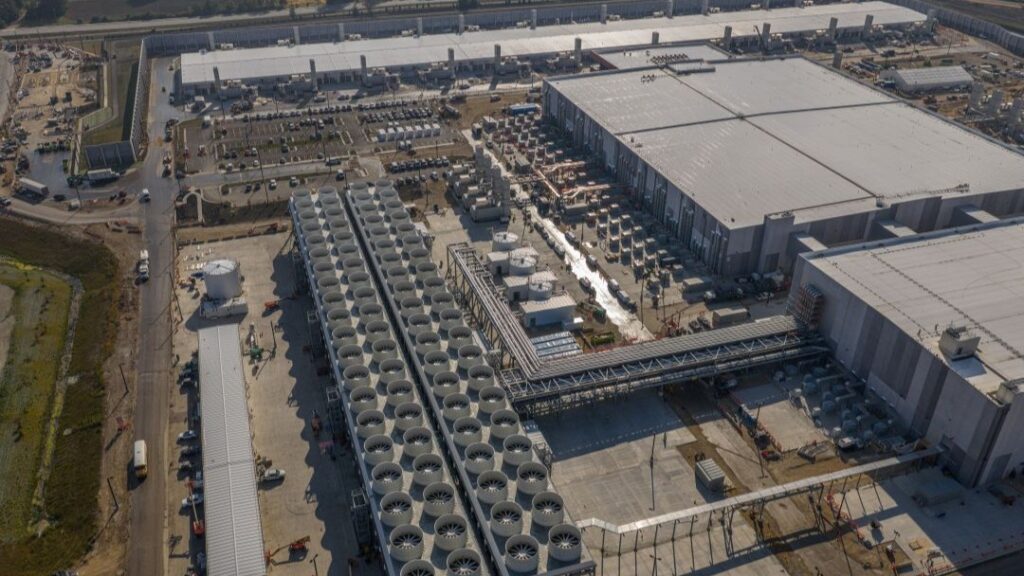
Microsoft is investing some $7 billion in two data center projects under construction and has announced plans to build 15 additional data centers valued at $13 billion, much of it in a sprawling slate of data center campuses in Mount Pleasant.

The first is slated to open later this year.

The two lawmakers kept to familiar corners throughout the discussion, with Gustafson advocating a “wait-don’t-regulate” approach to the emerging industry and Madison pressing for legislative guardrails. 

“When we have someone like Microsoft, who is being so responsible, has set the new standard that any other project that is going to be coming to the state is going to say, ‘okay, people accept this project,’” Gustafson said. “The best players that show the most sustainable practices are going to be the ones that elevate to the top.” 

Madison countered that it was legislators’ role to set that standard for companies.

“Yes, Microsoft is setting a golden standard, but by codifying that in state statutes, we are creating a guaranteed protection for all communities across the state,” he said. 

Both lawmakers noted that their constituents had expressed anxiety to them about being left behind in a changing job market.

Alaily highlighted Microsoft’s sustainability goals and corporate goodwill efforts, like its support for a “very large customer” utility rate supposed to keep consumers from bearing the cost of new utility infrastructure development. 

Last month, the company announced a “Community-First AI Infrastructure” plan where it promised to control its facilities’ energy and water usage and invest in job training and local nonprofits. 

“The ability to build out and deliver AI infrastructure really depends on communities coming to the conclusion that the benefits outweigh the cost,” Alaily said. “So, in short, these commitments are really designed to make sure that we are being a good neighbor here in Wisconsin.”

The lawmakers offered largely positive commentary on Microsoft. Madison extolled the benefits offered by the tech giant’s investment in southeast Wisconsin while Gustafson talked up the prospect of attracting workers to the state after years of lagging population growth. 

That labor demand is likely to be substantial: Alaily said the first of Microsoft’s new data centers was expected to employ 500 technicians alone – positions, she emphasized, that could be filled by high school graduates trained through the corporation’s partnership with Gateway Technical College – along with skilled trades like HVAC and construction workers. 

“We have young people who are just getting into the workforce, who arguably will probably make lucrative salaries building data centers their entire careers,” Gustafson said. “That is sustainable, long-term.”

Alaily also noted Microsoft’s investment in nuclear fusion projects, including a joint venture capital investment with the Green Bay Packers through TitletownTech into Wisconsin fusion startup Realta. 

Nuclear energy efforts have been gaining momentum in the Legislature, with Gov. Tony Evers signing bills – including a bill funding a site study for a nuclear fusion plant.

Both lawmakers spoke positively about new nuclear avenues for Wisconsin, though Madison made the case that the state needed to develop an integrated plan for utility development as it moved forward with new energy projects. 

“There’s some amazing opportunities here. We just have to plan accordingly,” he said.