
Scott Walker: How Republicans can salvage the 2026 midterms
Voters are upset. Even though median household income is up and poverty levels are down, consumer confidence fell in September to the lowest level since 2014.

Voters are upset. Even though median household income is up and poverty levels are down, consumer confidence fell in September to the lowest level since 2014.

Schools are struggling because, for the third year in a row, the state budget put no new money into general school aid, the Department of Public Instruction pointed out in an Oct. 15 press release. That’s after more than 15 years during which per-pupil spending in Wisconsin schools has failed to keep pace with inflation.

MPS has 36 schools that are less than half full, by its own counts. Another 48 are between 50% and 90% full.

When children keep dying in schools, the answer cannot be that every gun control proposal is unacceptable and every reform is a bridge too far. Leadership demands more than saying ‘no.’ It demands offering solutions.

Governments start taking steps to allow more construction, but policies at many levels add up to make land scarce and costly.

Putin gets sanctions relief. Americans get the illusion of cheaper fuel.

Every time I see a story about the latest anti-vax action by Health Secretary Kennedy, who despite all the evidence to the contrary still claims children’s shots cause autism, I recall the late 1950s when millions of parents rushed their children to get the Salk vaccine to prevent them from getting polio.
Even if President Trump’s deal to lift sanctions on Russian diesel exports stands up in a skeptical Congress, it’s only a few gallons of relief in a huge tank.

The amendment creates the impression that Wisconsin lacks protections against discrimination and that voters are being asked to create them. That is simply not true. Discrimination is already illegal under federal and Wisconsin law.

72 Wisconsin school districts are asking voters to approve a combined $802 million in new debt, $40 million in recurring funding, and $776 million in nonrecurring funding. The final bill of goods? $1.6 billion.

The Milwaukee County Executive spent an hour discussing his personal background, record in office, and priorities if he were to win the election in a conversation at Marquette with Derek Mosley.
If you’re a conservative who lives in a blue state or county, you face a terrible dilemma regarding abortion: stand on principle and probably lose, or use strategy and still possibly lose.
Today we’re joining forces for Wisconsin Roots Rising, a 24-hour statewide day of giving that brings together community-driven organizations and programs from both of our networks in a single coordinated campaign.

President Trump shared a fake endorsement from Denzel Washington on social media, raising questions about misinformation and the president’s willingness to spread it.

What does it mean for an American president to frame U.S. foreign policy in nihilistic terms?
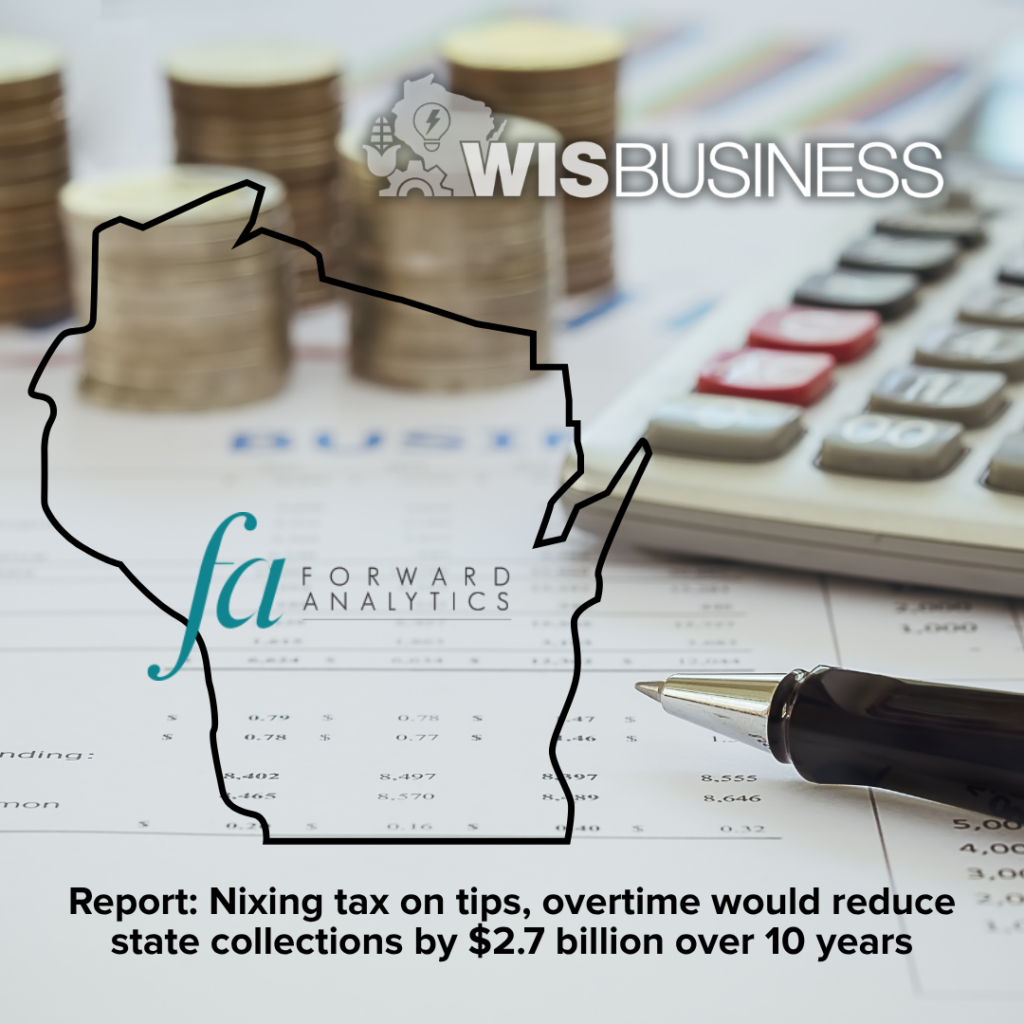
Changing Wisconsin law to mirror the federal law exempting tips and overtime from the income tax would reduce state collections by $2.7 billion over the next decade, according to a new report from Forward Analytics.

Gov. Tony Evers and the Wisconsin Dept. of Workforce and Development announced $6.6 million in grants to train workers on artificial intelligence and other skills. The grants, to be distributed across 84 employers, are meant to train over 3,800 people

The measure of this new political era cannot simply be the number of progressive policies passed in Madison. It must also be whether those policies create a Wisconsin where our children can build successful lives without having to leave home to do it.
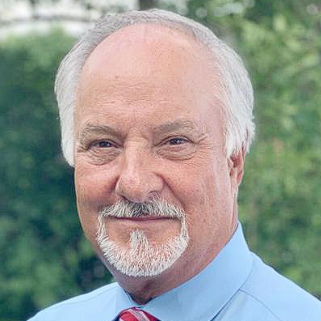
Legislating through amending Wisconsin’s supreme law should raise skepticism. It means politicians are unwilling to use regular order and seek compromise by working together to find broad solutions. Remember that when you vote.

Other states, including Minnesota and North Carolina, have already shown that regulators can challenge utility assumptions and require closer examination of alternatives rather than treating new gas plants as the default response to projected load growth.
Voters are upset. Even though median household income is up and poverty levels are down, consumer confidence fell in September to the lowest level since 2014.
Schools are struggling because, for the third year in a row, the state budget put no new money into general school aid, the Department of Public Instruction pointed out in an Oct. 15 press release. That’s after more than 15 years during which per-pupil spending in Wisconsin schools has failed to keep pace with inflation.
MPS has 36 schools that are less than half full, by its own counts. Another 48 are between 50% and 90% full.
When children keep dying in schools, the answer cannot be that every gun control proposal is unacceptable and every reform is a bridge too far. Leadership demands more than saying ‘no.’ It demands offering solutions.
Governments start taking steps to allow more construction, but policies at many levels add up to make land scarce and costly.
Putin gets sanctions relief. Americans get the illusion of cheaper fuel.
Every time I see a story about the latest anti-vax action by Health Secretary Kennedy, who despite all the evidence to the contrary still claims children’s shots cause autism, I recall the late 1950s when millions of parents rushed their children to get the Salk vaccine to prevent them from getting polio.
Even if President Trump’s deal to lift sanctions on Russian diesel exports stands up in a skeptical Congress, it’s only a few gallons of relief in a huge tank.
The amendment creates the impression that Wisconsin lacks protections against discrimination and that voters are being asked to create them. That is simply not true. Discrimination is already illegal under federal and Wisconsin law.
72 Wisconsin school districts are asking voters to approve a combined $802 million in new debt, $40 million in recurring funding, and $776 million in nonrecurring funding. The final bill of goods? $1.6 billion.
The Milwaukee County Executive spent an hour discussing his personal background, record in office, and priorities if he were to win the election in a conversation at Marquette with Derek Mosley.
If you’re a conservative who lives in a blue state or county, you face a terrible dilemma regarding abortion: stand on principle and probably lose, or use strategy and still possibly lose.
Today we’re joining forces for Wisconsin Roots Rising, a 24-hour statewide day of giving that brings together community-driven organizations and programs from both of our networks in a single coordinated campaign.
President Trump shared a fake endorsement from Denzel Washington on social media, raising questions about misinformation and the president’s willingness to spread it.
What does it mean for an American president to frame U.S. foreign policy in nihilistic terms?
Changing Wisconsin law to mirror the federal law exempting tips and overtime from the income tax would reduce state collections by $2.7 billion over the next decade, according to a new report from Forward Analytics.
Gov. Tony Evers and the Wisconsin Dept. of Workforce and Development announced $6.6 million in grants to train workers on artificial intelligence and other skills. The grants, to be distributed across 84 employers, are meant to train over 3,800 people across the state as part of the Wisconsin Training for
The measure of this new political era cannot simply be the number of progressive policies passed in Madison. It must also be whether those policies create a Wisconsin where our children can build successful lives without having to leave home to do it.
Legislating through amending Wisconsin’s supreme law should raise skepticism. It means politicians are unwilling to use regular order and seek compromise by working together to find broad solutions. Remember that when you vote.
Other states, including Minnesota and North Carolina, have already shown that regulators can challenge utility assumptions and require closer examination of alternatives rather than treating new gas plants as the default response to projected load growth.