Dustin Walsh: 3 billion reasons why Michigan shouldn’t mimic Wisconsin
It’s hard to imagine how the $3 billion package is going to result in an economic win for the state of Wisconsin or its taxpayers.


It’s hard to imagine how the $3 billion package is going to result in an economic win for the state of Wisconsin or its taxpayers.
Two Republican legislative leaders in 1995—when the budget for highways was separated from other state spending and finally passed on Nov. 16—say it’s time to raise the state gas tax by least 5 cents.

Hamstringing charter schools through reduced autonomy, diminished authorizing options and overzealous regulation, as the NAACP’s report recommends, will cripple what truly makes charter schools work — the freedom to provide what works for the students attending their schools.

Deal will cost $500 for every person in the state.

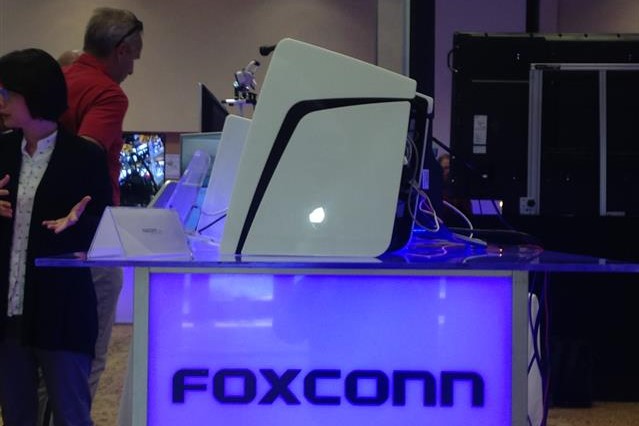
Caution is in order, as the Taiwan-based electronics giant is one of the world’s most brutal employers, notorious for driving workers to suicide.

As policymakers hammer out a historic deal for Wisconsin’s economy that will require unprecedented taxpayer funds to secure Foxconn’s proposed $10 billion dollar facility, they should reject the same-old, tired business model that exploits workers and disregards environmental standards.
Before the euphoria over this unfinished deal overtakes us, there are some factors we should consider.

Using our economic development dollars to support employee ownership has the potential to create and preserve millions of good jobs.
Alleged study asserts but never begins to prove $2 billion in waste.

The more delays, the higher the cost and the more annoyances.
In “Two Minutes with Mitch” radio personality Mitch Henck gives his two cents after President Donald Trump’s recent speech to the Boy Scouts’ national jamboree.

Packaging state resources into a powerful program to create jobs over a wide array of communities is the smartest thing to have emerged from our statehouse in a very long time. And my party needs to get on board this plan and provide hearty support.
So far the most effective Democratic strategy appears to be, as the kids say, “ghosting” — hiding under your Capitol Hill desk and waiting for all the announcements to blow over. Then, whether the deal works or doesn’t, you can take credit either way.
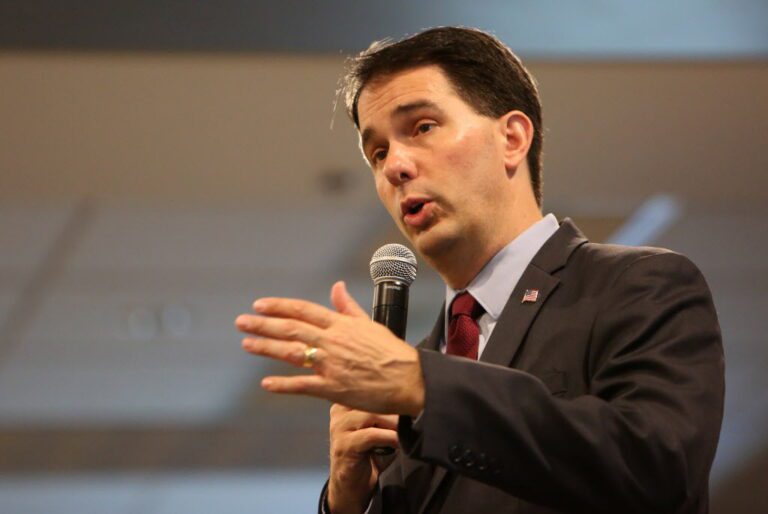
Walker’s proven conservation hostility is again on full display through the bill he crafted secretly to exempt the Foxconn development from an what should be a routine Environmental Impact Statement review, thus eliminating in advance the best method to catalogue and protect wetlands and connected resources the project would harm.
I’d like to see the Foxconn deal pitched like Chantix, Lyrica and Viagra, with all the disclaimers.
In “Two Minutes with Mitch” radio personality Mitch Henck gives his two cents on an idea floated to let governors run health care in their own states.
We’re just about to observe the 72nd anniversary of the use of the first atomic bomb on Japan. And the truth is that the world today is too dangerous a place for nuclear weapons.
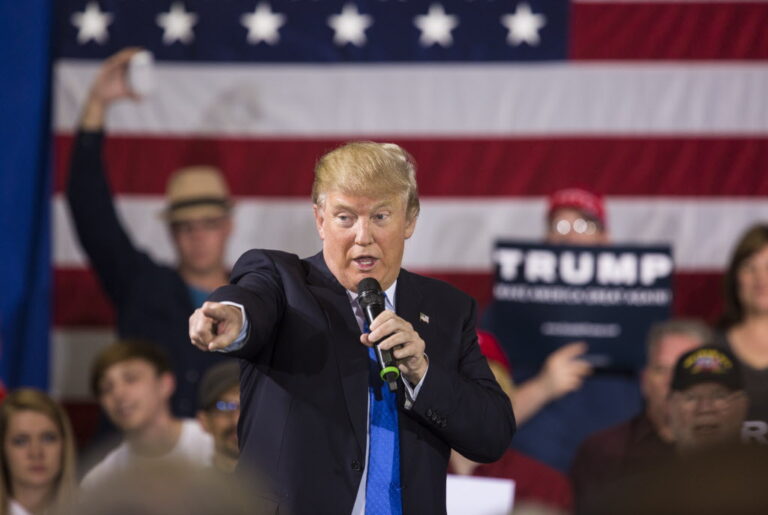
Are we watching the rule of law, essential to American democracy, being slow-cooked to death?

As befits a year in which anything, it seems, can happen, the Wisconsin Supreme Court’s public records docket this term was marked by atypical cases.

Urban Agriculture has the ability to propel Milwaukee forward.

It’s hard to imagine how the $3 billion package is going to result in an economic win for the state of Wisconsin or its taxpayers.
Two Republican legislative leaders in 1995—when the budget for highways was separated from other state spending and finally passed on Nov. 16—say it’s time to raise the state gas tax by least 5 cents.
Hamstringing charter schools through reduced autonomy, diminished authorizing options and overzealous regulation, as the NAACP’s report recommends, will cripple what truly makes charter schools work — the freedom to provide what works for the students attending their schools.

Deal will cost $500 for every person in the state.

Caution is in order, as the Taiwan-based electronics giant is one of the world’s most brutal employers, notorious for driving workers to suicide.
As policymakers hammer out a historic deal for Wisconsin’s economy that will require unprecedented taxpayer funds to secure Foxconn’s proposed $10 billion dollar facility, they should reject the same-old, tired business model that exploits workers and disregards environmental standards.
Before the euphoria over this unfinished deal overtakes us, there are some factors we should consider.

Using our economic development dollars to support employee ownership has the potential to create and preserve millions of good jobs.
Alleged study asserts but never begins to prove $2 billion in waste.

The more delays, the higher the cost and the more annoyances.
In “Two Minutes with Mitch” radio personality Mitch Henck gives his two cents after President Donald Trump’s recent speech to the Boy Scouts’ national jamboree.
Packaging state resources into a powerful program to create jobs over a wide array of communities is the smartest thing to have emerged from our statehouse in a very long time. And my party needs to get on board this plan and provide hearty support.
So far the most effective Democratic strategy appears to be, as the kids say, “ghosting” — hiding under your Capitol Hill desk and waiting for all the announcements to blow over. Then, whether the deal works or doesn’t, you can take credit either way.
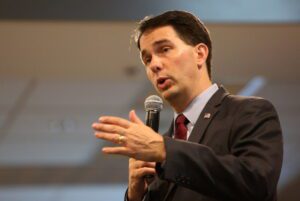
Walker’s proven conservation hostility is again on full display through the bill he crafted secretly to exempt the Foxconn development from an what should be a routine Environmental Impact Statement review, thus eliminating in advance the best method to catalogue and protect wetlands and connected resources the project would harm.
I’d like to see the Foxconn deal pitched like Chantix, Lyrica and Viagra, with all the disclaimers.
In “Two Minutes with Mitch” radio personality Mitch Henck gives his two cents on an idea floated to let governors run health care in their own states.
We’re just about to observe the 72nd anniversary of the use of the first atomic bomb on Japan. And the truth is that the world today is too dangerous a place for nuclear weapons.
Are we watching the rule of law, essential to American democracy, being slow-cooked to death?
As befits a year in which anything, it seems, can happen, the Wisconsin Supreme Court’s public records docket this term was marked by atypical cases.
Urban Agriculture has the ability to propel Milwaukee forward.