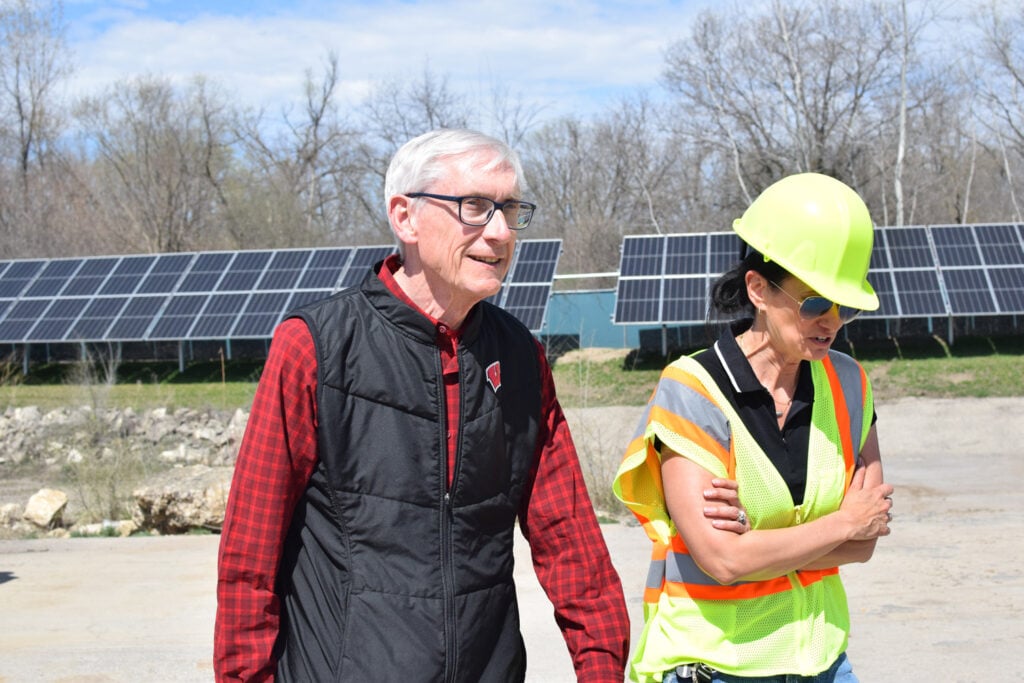
The Evers administration released what it called a roadmap to reducing greenhouse gas emissions while driving economic growth, protecting natural resources and improving the health of state residents.
Produced by the Office of Sustainability and Clean Energy, the report released yesterday was billed as the “first statewide framework to address all major sources of greenhouse gas emissions in Wisconsin.”
The report, which touched on everything from the ag industry to building codes and energy generation, didn’t include a price tag for the proposals.
Several groups immediately raised concerns about the potential impact.
>> WisPolitics is now on the State Affairs network. Get custom keyword notifications, bill tracking and all WisPolitics content. Get the app or access via desktop.
For example, the report noted that animal digestive systems are one of the largest producers of methane gas and manure management accounts for two-thirds of agricultural emissions. It noted progress in feed alternatives that reduce the production of methane during the digestive process in animals and suggested support could come from state agencies.
It also suggested new businesses could emerge to collect, sort and process organic waste.
Jason Mugnaini of the Wisconsin Farm Bureau Federation raised concerns that proposals in the plan would make farming more expensive and shift production to countries with weaker conservation practices. He said Wisconsin farmers are already leaders in conservation through voluntary efforts rather than government mandates.
“They don’t need more roadmaps; they need fewer roadblocks,” Mugnaini said, suggesting the state should focus on streamlining the DNR permitting process, among other things.
Gov. Tony Evers has previously called for making 100% of Wisconsin’s energy consumption carbon-free by 2050 through increased reliance on renewable sources.
The report suggests that move could create skilled jobs in solar, wind and energy storage sectors, as well as system maintenance. The efforts also could attract private investments and federal funding, according to the report.
“Through state policy, community action, and private partnership, the new Emissions Reduction Roadmap can help create new jobs, improve community health, and bring energy production back to Wisconsin, securing a more sustainable future for our state,” said DOA Secretary Kathy Blumenfeld.
But Scott Manley, executive vice president of government relations for Wisconsin Manufacturers & Commerce, called it an “unserious plan that doubles down on, rather than learns from, the failures of European countries.
“Those policies are a recipe for economic disaster for a manufacturing state like Wisconsin,” Manley said.