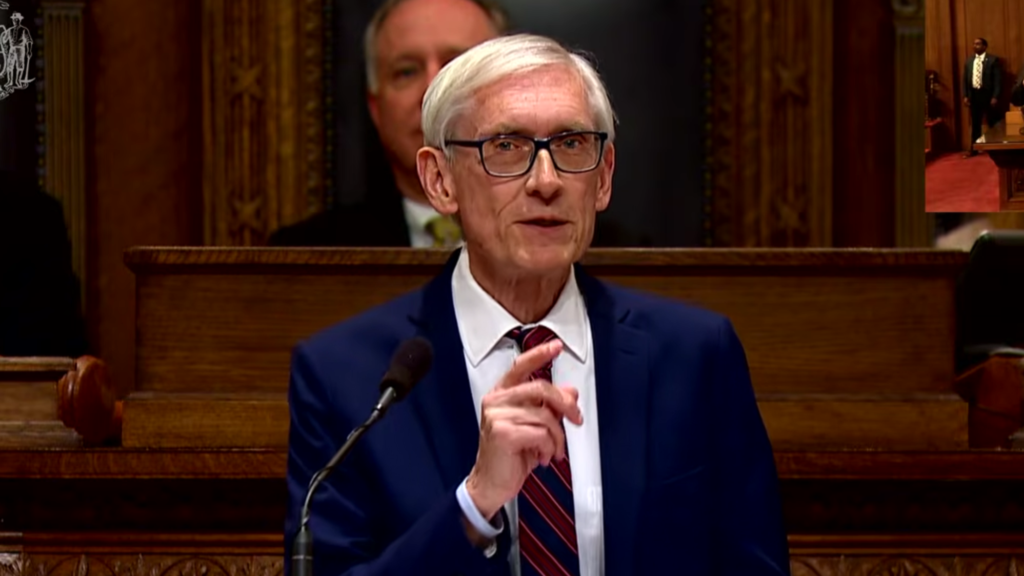
Gov. Tony Evers on Friday signed a new definition of antisemitism into state law critics allege could be used to silence criticism of Israel.

The law means Wisconsin will use the International Holocaust Remembrance Alliance’s working definition of antisemitism. 

Proponents of what is now Wisconsin Act 143 say the bill would provide clear guidance amid rising levels of antisemitism in Wisconsin and the United States.

“This definition shines a light on behavior that might otherwise be excused, dismissed or even justified,” state Rep. Ron Tusler, R-Harrison, wrote in October in support of the bill. 

Critics say the law is meant to suppress pro-Palestinian speech and will open up the state to First Amendment lawsuits.

“The IHRA definition is not a neutral tool to address antisemitism,” said Ellie Yousif of the American-Arab Anti-Discrimination Committee in a statement today. “It is part of an expanding legal and political apparatus that regulates Palestinian advocacy, shields state violence from scrutiny, and introduces risk into constitutionally protected speech.”

The guv also signed off on legislation requiring individuals circulating nomination and recall petitions to be eligible Wisconsin voters. The new requirement, which applies to any office except president and vice president, was pushed by Republicans after the failed attempts to recall Assembly Speaker Robin Vos, R-Rochester. Many of the circulators were from out-of-state, and the Elections Commission has recommended charges against 13 people who were involved in the effort. 

In all Friday, Evers signed 27 bills and vetoed 16. The latter includes three backed by State Armor, a lobby group that has pushed for Wisconsin and other states to adopt laws to curb foreign and particularly Chinese influence on state institutions.

Evers vetoed AB 663, which would have restricted academic and research partnerships between the Universities of Wisconsin and colleges and universities in one of several “foreign adversary” nations. Meanwhile, AB 673 sought to bar medical and research facilities in the state from using genetic software produced by those countries. 

Evers wrote that he objected to the Legislature meddling in UW’s daily decision-making under AB 663 and AB 673. He added in his veto message on AB 673 that he didn’t have a problem with the general intent of the bill. But he feared it could unintentionally harm the university system’s ability to secure research awards or participate in multi-institution or international research or industry partnerships. 

He also vetoed a bill – AB 674 – that would bar health insurers from knowingly covering an organ transplant if the organ was procured from or occurred in a country known to have engaged in forced organ harvesting. 

Evers wrote that he vetoed the bill because addressing the issue of organ harvesting “will require a multi-faceted approach with international cooperation, which no singular state can force or facilitate on its own.” 

The other bills he vetoed included:

  • AB 457, which sought to require school districts seeking to put a referendum on the ballot to first receive certification from the state Department of Public Instruction that they’re current with all required financial reports that have to be filed with the agency. Republicans pushed the bill after Milwaukee voters approved a $252 million referendum before finding out the district hadn’t filed required financial reports with DPI. Evers wrote in his veto message that he objected to the Legislature’ trying to encroach on the decision making of local governments and to create an additional hurdle for districts going to referendum.
  • SB 16, which sought to bar Wisconsin schools from belonging to an athletic association unless it elects to be governed by the state’s open records and meetings law. Republicans pushed the bill as a shot at the Wisconsin Interscholastic Athletic Association, and Evers wrote in his veto message he objected to lawmakers trying to subject a private entity to the open records law since they have exempted themselves from the requirement.
  • SB 610, which sought to add a penalty enhancer for those convicted of drug delivery charges within 1,000 feet of a shelter. Evers wrote in his veto message that he objected to lawmakers continuing to take an “archaic and outdated approach to the criminal justice system.”