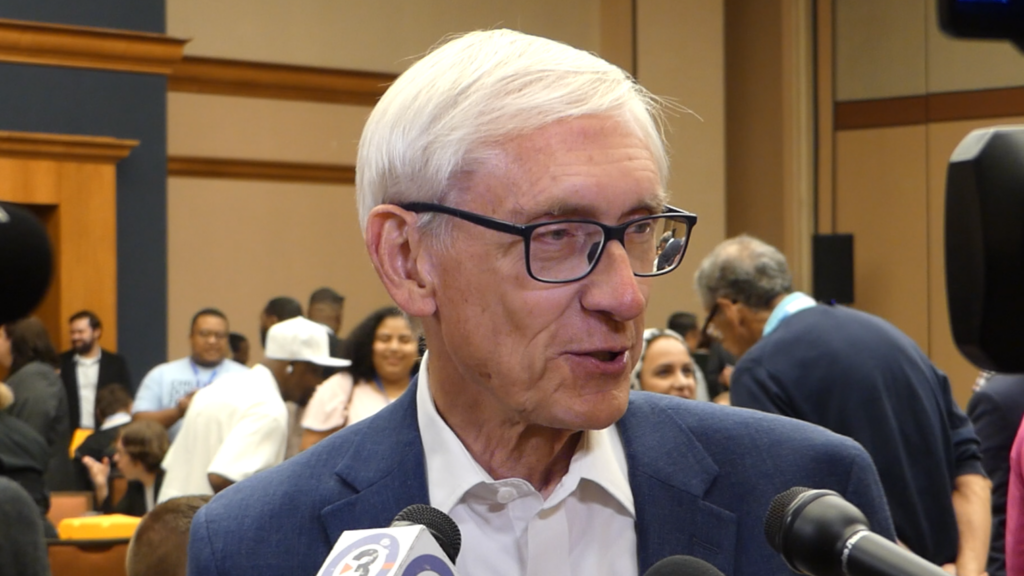
Gov. Tony Evers today vetoed 23 bills, including GOP efforts to exempt cash tips and overtime from the state income tax and to overturn his veto that extended by four centuries the annual increases in how much school districts can spend per student.
He also nixed a GOP bill that sought to reduce state aid to counties by 15% if the sheriff failed to inquire about the immigration status of those detained in their jails for felonies. AB 24 also would’ve penalized counties if the sheriffs didn’t comply with an administrative warrant from the U.S. Department of Homeland Security to detain someone in their custody.
State Sen. Julian Bradley, who co-authored the bill, noted Evers previously questioned who would be against sending people who committed crimes back to their native country if they’re undocumented in the U.S.
“This bill has always been about one thing: removing dangerous criminals from our communities,” the New Berlin Republican said. “Governor Evers may talk a good game, but when it came time to act, he proved that talk is cheap.”
>> WisPolitics is now on the State Affairs network. Get custom keyword notifications, bill tracking and all WisPolitics content. Get the app or access via desktop.
Evers’ 2025-27 included a proposal to exempt cash tips, but GOP lawmakers rejected it. Instead, they authored legislation that would’ve created a deduction of up to $25,000 on tips for tax years 2025 through 2028, largely mirroring the federal tax break created by Republicans and President Donald Trump in the One Big Beautiful Bill Act.
In his veto message, Evers knocked Republicans for adopting what he called a “temporary income tax provision instead of working to provide comprehensive and lasting relief to Wisconsin taxpayers.”
He also objected to “the Legislature effectively ceding control over the direction of state tax policy to Congress by connecting the proposed state tax deduction for tips to any change in the federal deduction, regardless of what is best for Wisconsin.”
The Department of Revenue had projected the proposed exemption in SB 36 would’ve reduced taxes by $53.2 million in fiscal year 2026 and $44.1 million in fiscal year 2027.
Like with the proposed tax exemption for tips in SB 36, the one for overtime in AB 461 would’ve created a break similar to the federal one. Unlike the federal break, which covers overtime earned essentially during Trump’s second term in office, the proposed state break would’ve been permanent. It came with a price tag of $474 million through tax year 2028.
Evers wrote in his veto message that a salaried worker making $35,000 a year would pay a higher tax rate than an hourly employee making the same amount with overtime. He objected to “such a large fiscal impact for the small share of workers who earn overtime pay, while Wisconsinites across our state are working hard but still can’t afford rising costs.”
Meanwhile, SB 389 sought to end the annual increase in the school spending limit after the 2026-27 year. GOP lawmakers had intended it to last just for the 2023-25 biennium. But Evers used his partial veto to strike out numbers and punctuation to make the ending date 2425.
“My 400-year veto is here to stay, lawmakers. Just fund our public schools and get over it,” Evers wrote in his veto message.
Other bills Evers vetoed include:
- SB 622, which sought to rein in the Department of Agriculture Trade and Consumer Protection’s ability to impose fees after the agency proposed hikes as high as 1,700% on those working in animal markets.
- AB 105, which would require businesses to verify the age of those accessing their websites before publishing material on the internet that’s harmful to minors. The bill also would ban businesses from publishing an obscene depiction of a purported child.
- AB 248, which sought to overturn a state Supreme Court ruling confirming that executive branch appointees may remain in office after their terms expire. The court in different rulings allowed an appointee of Gov. Scott Walker to remain on the Natural Resources Board after his appointment expired because the state Senate hadn’t confirmed a successor. It also was cited by the court in allowing Elections Commission Administrator Megan Wolfe to remain in her job after her initial four-year term ended.
- AB 903, which sought to require county officials to terminate, within a set time frame, the parental rights of babies left to Wisconsin’s child welfare system under a statute known as the safe haven law. WisPolitics reported last month tribal members had concerns it would infringe upon the federal Indian Child Welfare Act’s mandate to preserve Native families and, by extension, the future of tribal communities.
See the governor’s release with the full list of bills he acted on today.