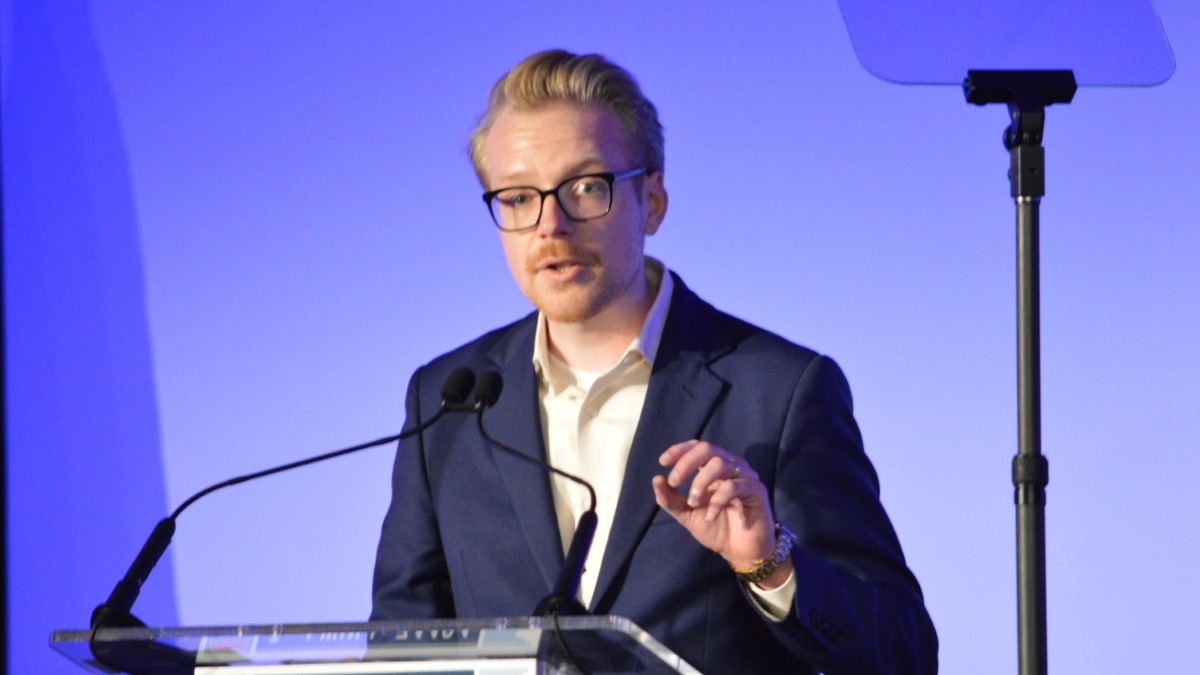
State Chair Devin Remiker says Dems can’t be overconfident that a blue wave alone will carry them to a trifecta in the state Capitol for the first time in 16 years.

“There is always a sense that the pendulum swing is inevitable,” Remiker said in a new interview to preview this weekend’s Dem state convention. “In Wisconsin, particularly this year for our party, the opportunity that we have is ginormous. The chance to win a trifecta for the first time in almost two decades is closer than ever before, but also between us and that is an immense amount of hard work.” 

As Dems prepare to gather in Madison, Remiker sees numerous signs they’re on the cusp of a good environment for reasons beyond Donald Trump’s struggles in the polls amid rising costs. 

During a No Kings protest in March, for example, the party engaged many people in the crowd that it hadn’t been able to reach through phone calls or door knocks in the 2024 fall and 2025 spring campaigns, which included intense turnout efforts. He said that suggests the party has a unique opportunity to capitalize on that energy.

But the party has its struggles, too, with surveys regularly showing the Dem brand is underwater. The latest Marquette Law School Poll of Wisconsin voters, conducted in March, found 42% had a positive view of the Republican Party, while Trump’s net job approval was minus 14, an all-time low for his two terms in the White House.

Still, just 35% had a favorable view of the Dem Party, while 58% had an unfavorable one.

Remiker chalked that up to a base unhappy with how the party initially responded to Trump’s first months in office. Still, he noted it hasn’t impacted the voting habits of Dems, who have regularly overperformed in special and off-year elections over the past 18 months. 

He said the party can’t just capitalize on a reaction against Trump but must win back voters and expand the Dem tent. That means it’s imperative that the gubernatorial contenders provide a positive economic vision for the future in their pursuit of the party’s nomination.

“If we can have a message that really centers our economic agenda and wins back an argument that voters by default kind of trust Republicans with their pocketbook, I think it’s something that can make a lasting difference for the Democratic Party in Wisconsin and beyond, and we start doing that work this year,” Remiker said.

Dems have a multi-candidate gubernatorial primary with the potential to leave the eventual nominee financially spent. 

To combat that, the state party is working with Gov. Tony Evers to raise money for the eventual nominee. Remiker declined to share a fundraising target for the gubernatorial effort, adding he’s also unsure how much the party will need to pull in for legislative races because it’s not clear how much Republicans will have to invest.

He said an expanded U.S. Senate map with states like Alaska, Ohio and Texas demanding national resources will make it harder for Wisconsin Republicans to pitch donors to invest here, especially if maintaining control of the state Legislature is seen as an uphill battle.

In 2022, the previous gubernatorial election year, the state Dem Party raised $23.8 million through its main state account.

“I’m not sure we necessarily know what the sliding scale of priorities are and what it’s going to take, but I know that based on what we’ve done in 2022, that seems like a fairly responsible starting point,” Remiker said.

In the race for control of the Legislature, most have focused on four seats in the state Senate: the 31st, represented by Dem Jeff Smith; the 17th, represented by Republican Howard Marklein; the open 21st that includes parts of Racine and Milwaukee counties; and the open 5th in suburban Milwaukee. Dems have to win any three of those races to flip control of the chamber.

Remiker said he also has the 25th SD on his list of targets. Sen. Romaine Quinn, R-Birchwood, was elected to the seat in 2022, but his previous home was drawn into the 23rd SD under the maps put in place in 2024, and he’s now running for that seat.

The 25th runs from Polk County along the St. Croix River and stretches across northern Wisconsin to Iron County. Former GOP Reps. Angie Sapik, who served in the 2023-24 session, and Erik Severson, who served two terms from 2011-15, are running for the Republican nomination.

Charly Ray, a small business owner, outdoorsman and local elected official, is running as a Dem, and Remiker called him a fantastic candidate in a place “that opportunity may not have quite existed before with folks’ eyes being open based on everything that Trump has done.”

“I feel great about those districts,” Remiker said of the four considered the most in play. “The heavier lift for me is to expand the map and trying to bring that historically more Republican district into our column.”

Remiker said there aren’t as many opportunities to expand the map in the Assembly. There are eight GOP-held seats on most target lists, though five are considered the most in play.

That includes the open 21st in the Milwaukee suburbs that has been represented by Jessie Rodriguez, of Oak Creek, and the open 53rd in the Fox Valley that Dean Kaufert, of Neenah, represented this session. Both opted against seeking reelection in the two toughest seats for Republicans to defend this fall, based on Trump’s performance in the 2024 election.

Rep. Todd Novak, of Dodgeville, has the next toughest seat, followed by Rep. Bob Donovan, of Greenfield, and freshman Rep. Benjamin Franklin, of De Pere. All three represent seats where Kamala Harris took more votes than Trump.

After that, the possible targets include: Clint Moses, of Menomonie; Pat Snyder, of Weston; and Shannon Zimmerman, of River Falls. But those seats are considered reaches with each winning more than 53% of the vote in 2024.

But Remiker said the path to a trifecta is there. 

“Ultimately, this will come down to persuading 250 people in Wausau, Wisconsin, that they might need to vote against an Assembly member that they know personally and maybe known for years. That can be a tall order. If we don’t put in the work, we might not be able to get there,” Remiker said.

Listen to the full interview.