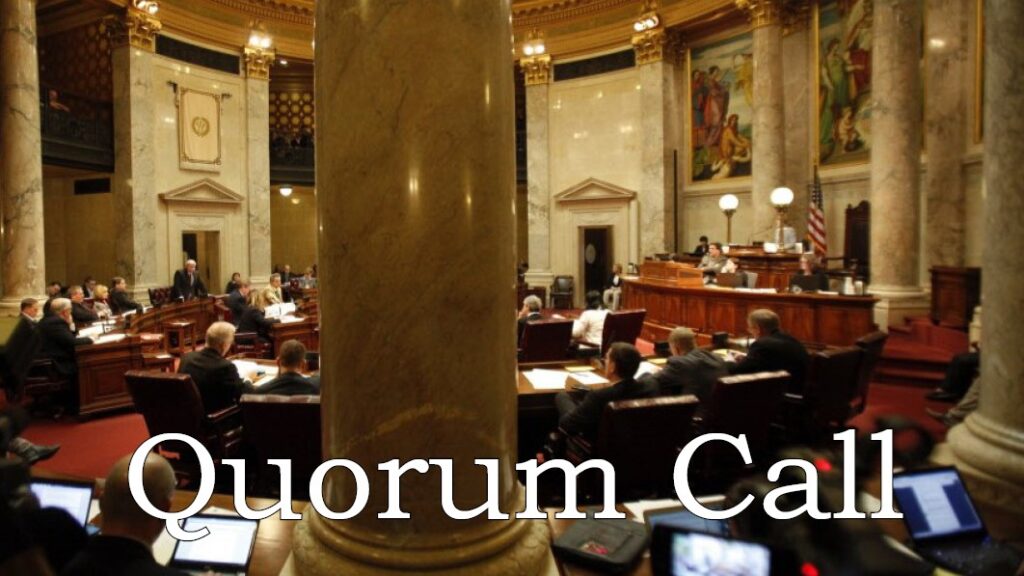
The state Senate today signed off on sending two constitutional amendments to voters this November that would bar closing houses of worship during an emergency and prohibit preferential treatment based on race, sex or other factors.

The chamber also teed up asking voters this fall if governors should be banned from using their partial veto power to create or increase any tax or fee.

The amendment on preferential treatment and discrimination sparked the most intense debate of the three that were before the Senate. AJR 102 would bar governmental entities from doing either based on race, sex, color, ethnicity or national origin in public employment, education, contracting or administration.

State Sen. Steve Nass, R-Whitewater, argued no one should be granted special treatment based on race, pointing to several programs in state government he said do just that. He noted the U.S. Supreme Court concluded that students in the college application process must be judged by their experience as an individual and not their race. He also pointed to the debate coming two days after the holiday celebrating Martin Luther King Jr. while quoting the civil rights leader saying he had a dream that his four children would someday be judged by the content of their character, not the color of their skin.

“Those words ring true like a church bell on a winter night,” Nass said.

Before Nass spoke, state Sen. Dora Drake, D-Milwaukee, said some of her colleagues often misquote King, ignoring his other remarks while also failing to pay heed to American history. She said that includes the decades it took to correct the discrimination that stemmed from Jim Crow laws with the Voting Rights Act, Civil Rights Act and court decisions.

She said state programs meant to help women- and minority-owned businesses to win contracts aren’t mandates, but goals.

“When we take away protections and goals, it leads to discrimination, and just because it’s there doesn’t take it away from others,” said Drake, one of two Black senators.

The Senate signed off on the amendment 18-15 along party lines. Meanwhile, the Senate approved AJR 10 to bar closing houses of worship during emergencies by the same margin with no debate.

The full Legislature approved both amendments last session as well, and they will now appear on the November ballot.

The amendment to curb guvs’ partial veto powers came after Evers used his to write into state law an annual increase in the limit on per pupil spending for the next four centuries after lawmakers originally intended it to last just two years.

The state Supreme Court last year upheld Evers’ 400-year veto, and guvs currently are only limited in using their partial veto on appropriation bills in that they can’t create a new word by rejecting individual letters or a new sentence by combining parts of two or more sentences.

Republicans have blamed Evers’ veto for a rise in property taxes, particularly for schools, on bills that homeowners received in December. No amendment backers spoke during the floor debate before the 18-15 party-line vote.

But Sen. Melissa Ratcliff, D-Cottage Grove, knocked Republicans for the proposal, saying it would limit a guv’s ability to correct “harmful or irresponsible provisions in a budget that come from the Legislature.”

The Assembly would have to sign off on the amendment before it could go to voters this fall. Both chambers passed it last session.