By JR Ross and Colby Lamb,
WisPolitics-State Affairs
GOP state Sen. Pat Testin told WisPolitics he’s still working to shore up Republican support in the Senate to extend the stewardship program, including floating an idea to halt land acquisition in northern Wisconsin.
The Stevens Point Republican added that even if he wins over a couple of his colleagues, he’d still likely need Majority Leader Devin LeMahieu to allow the bill to go to the floor next week without 17 GOP votes for it to pass. Even then, he’s at risk of losing needed Dem support to get it out of the chamber in that scenario because of the proposed change to limit land purchases north of U.S. 8.
He’s also facing a time crunch. Testin said if the Senate fails to pass the bill during Wednesday’s floor period, it could be dead for the session. The chamber hasn’t announced plans to be in again before the Assembly plans to adjourn by Feb. 19.
>> WisPolitics is now on the State Affairs network. Get custom keyword notifications, bill tracking and all WisPolitics content. Get the app or access via desktop.
“This bill has been on life support more times than I can count,” Testin said in an interview. “But we have been able to breathe life into this by making tweaks and changes based on the feedback we’ve gotten.”
A Senate committee this week took public testimony on the two bills that would extend the stewardship program. Originally, the package called for a four-year extension through mid-2030. But the version that cleared the Assembly last month would instead only add two years to the program, whose authorization ends June 30, and it would significantly cut back land acquisitions.
The current stewardship program designates $16 million annually for land acquisition. But the Assembly version includes only $1 million for land along the Ice Age Trail. The package also includes $250,000 annually for acquisitions of 5 acres or less that improve access to hunting, fishing or trapping opportunities and are contiguous to land already owned by the state.
The overall funding for the program would also be reduced from $33.25 million to $28.25 million annually.
Under the current program, nonprofit conservation organizations are eligible for grants for up to 50% of the costs to acquire or develop land for outdoor recreational activities.
The bill that passed the Assembly along party lines doesn’t include any funds for those grants to nonprofits.
Testin said he is looking to change that provision to attract Dem support for the bill. He also said the “hook and bullet crowd” has made clear it would prefer to see those funds in the final package for work they do.
In his own caucus, Testin said there are some who would be fine if authorization for the 37-year-old program expired. Others want to see something get done, while another portion of his caucus would prefer to focus on maintaining what is already in the program and opposes additional land acquisition.
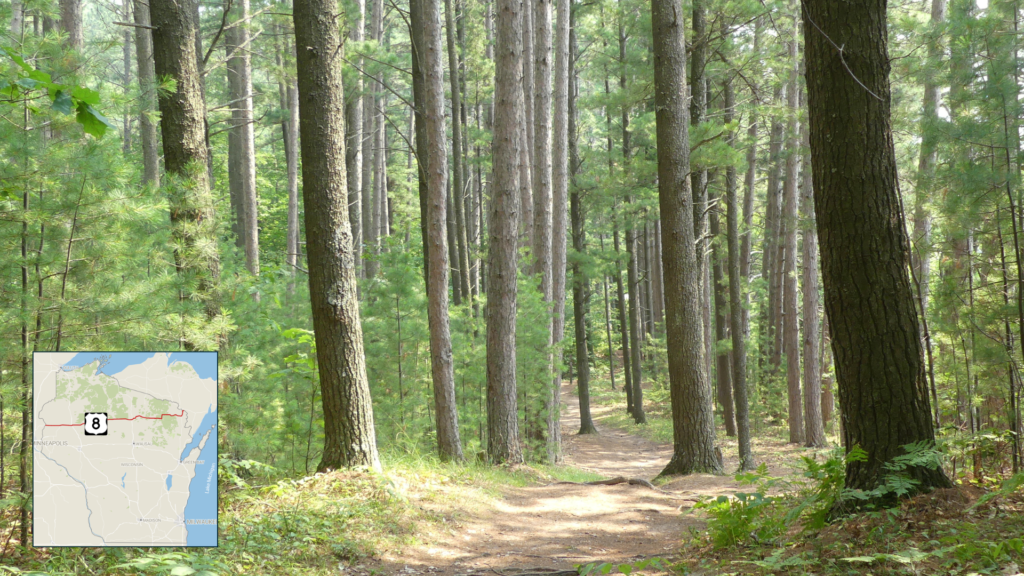
That’s why he’s suggested cutting off land acquisitions north of U.S. 8, which runs from St. Croix Falls in western Wisconsin to Rhinelander and Crandon before hitting the border with Michigan’s Upper Peninsula. But Testin said that’s a “pinchpoint” with Dems that may lose him possible support from that caucus.
The areas that would be impacted by the proposal currently have the highest percentage of land protected by the program, according to 2024 data from Gathering Waters and the Department of Natural Resources.
That includes:
- Rep. Chanz Green’s 74th Assembly District, which has 5.1% of its land protected, accounting for about 25.32% of the total land in the program.
- The northern half of Rep. Jeffrey Mursau’s 36th Assembly District would be excluded; in his district’s entirety, 5.08% of land is protected and roughly 15.37% of the state’s protected acres.
- Assembly District 34, represented by Rep. Rob Swearingen, has 4.69% of its land protected, accounting for 9.4% of the state’s total.
- The northern half of Sen. Mary Felzkowski’s 12th Senate District. Felzkowski’s entire district has 13.71% protected, equaling roughly 32.69% of the state’s total protected acres.
- Sen. Romaine Quinn’s 25th District, which has 8.59% of its land protected, about 30.39% of the state’s total.
Felzkowski told WisPolitics the idea of closing off areas north of U.S. 8 to additional acquisitions is appealing. Still, she’d like additional changes to allow communities that have enrolled land in stewardship to pull it out for development.
Such a change would have to include those communities paying back taxpayers, including interest, for funds they received to enroll the land in stewardship. If included, Felzkowski said it would be enough to get her to vote for the bill.
If something like that isn’t included, she’d have to debate whether the U.S. 8 proposal would be enough to get her support for the bill on the floor.
“I think it’s wrong to lock communities into forever. I would like to give them flexibilities,” Felzkowski said.
Underscoring the delicate balance Testin is navigating, GOP Sen. Rob Stafsholt said he opposes including a provision limiting land acquisitions north of U.S. 8.
The New Richmond Republican, who chairs the Financial Institutions and Sporting Heritage Committee that took public testimony on the legislation this week, said he supports renewing the program. He added the sporting groups that want him to represent their ideas in Madison also want to see it renewed and without such a restriction.
Stafsholt argued if there’s a wide swath of land protected by stewardship that surrounds, for example, an 80-acre, privately owned plot, it makes sense for the state to acquire that land. It then would make one contiguous area for the public to enjoy without worrying about people unintentionally crossing private property.
Stafsholt said he was giving Testin time to work with various factions on their concerns before deciding whether to exec the bill.
“I think stewardship as a whole is getting pulled in about four different directions, and it’s fractured different groups,” he said.
A spokesperson for Senate Minority Leader Dianne Hesselbein, D-Middleton, said discussions with Testin on the bill were ongoing, but declined further comment.