
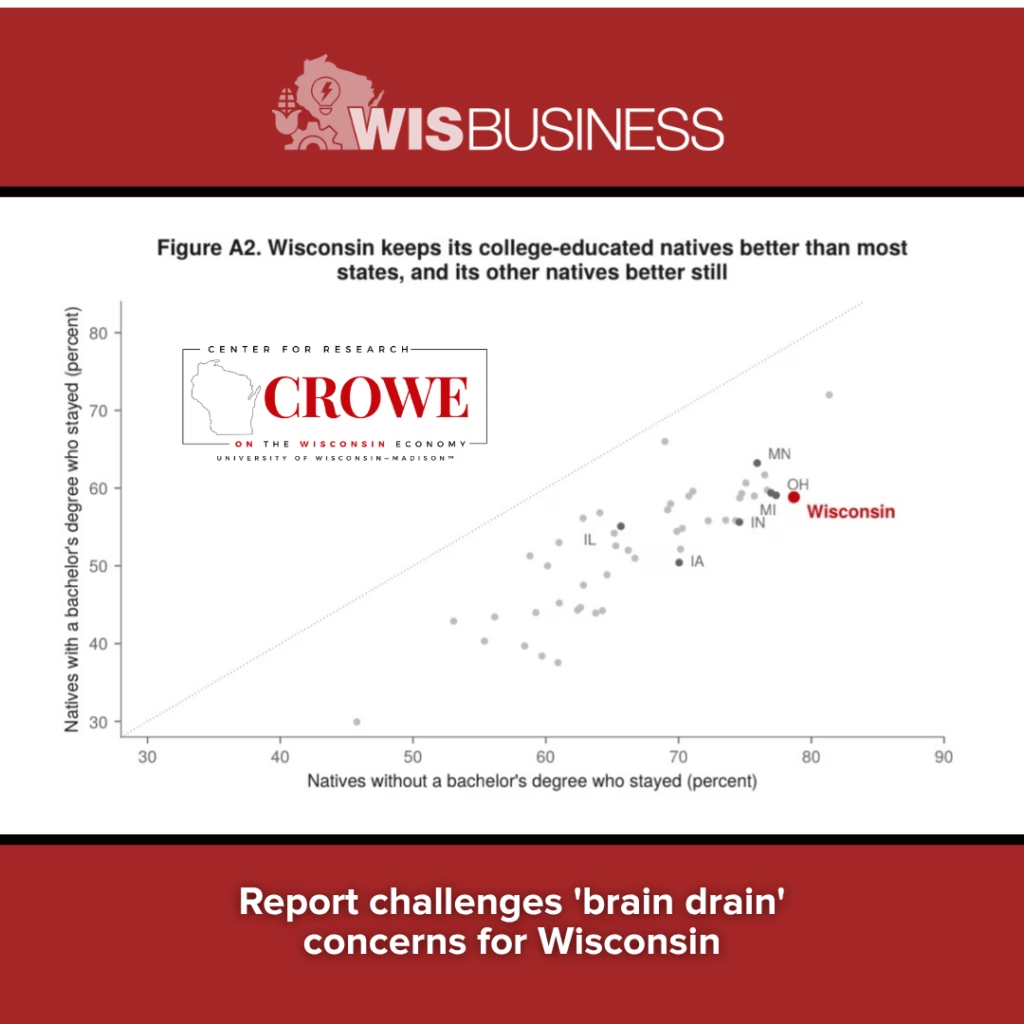
A new report from a UW-Madison think tank challenges the notion that Wisconsin struggles with “brain drain,” arguing a lack of educated people coming to the state is a greater challenge.
The Center for Research on the Wisconsin Economy, or CROWE, yesterday issued a report arguing the issue of “brain drain” is greatly exaggerated for Wisconsin and based on a flawed analysis. It refers to concerns that have been raised about the state’s college-educated adults leaving to work elsewhere at a higher rate than those arriving.
But report authors say the widely cited ranking behind these worries doesn’t fully capture this idea.
They note the state is ranked No. 2 in the country for the difference between the share of Wisconsin-born people with a bachelor’s degree or higher now living elsewhere, and those born elsewhere who now live in the state with the same educational attainment. This difference of 14.6 percentage points — 59.8% versus 45.2%, respectively — is the second highest among U.S. states.
Authors argue this figure “captures a difference in educational composition” rather than migration, since it doesn’t include when any of those people changed residence.
“A second-place rank on that statistic does not mean Wisconsin has the nation’s second-worst current loss of college graduates. … A Wisconsin-born 35-year-old living in Minneapolis is included whether she moved last year, after college, or with her parents as a child,” authors wrote.
They argued the “more distinctive finding” is who comes to Wisconsin, noting the state attracted college graduates from beyond 500 miles at about 62% of the rate implied by its share of the college-educated population. That’s compared to about 86% for the median state.
Among those arrivals, 29.5% were originally born in Wisconsin, compared to 16.2% for the median state.
“Excluding returnees, Wisconsin’s long-distance attraction index falls to 0.52, compared with 0.83 in the median state … Wisconsin is better at attachment than attraction, and so is much of the upper Midwest,” authors wrote.